What Does Rest Really Look Like in Postpartum?
It can feel genuinely hard to rest. We live in a culture that pushes us to go-go-go and rewards nonstop productivity. So it makes sense that many people feel uncomfortable slowing down, especially if they’re used to needing movement or exercise to feel good. Some even feel “lazy” for sitting still or taking a nap.

When I became a mother for the first time, I rode the post-birth high for weeks. I was so in love with my baby and so excited to be a mom that I had a hard time resting—and I didn’t even realize how much I needed it. At first, I felt fine waking up frequently through the night, and was up and about during the day with family and friends. I even went to a family birthday party one week postpartum. (This is not a flex. If I could go back, I would do things very differently!)
And yet, rest is absolutely critical in postpartum. An extended rest period is one of the pillars of proper postpartum care. It is protective against postpartum depression and anxiety, postpartum pelvic issues including uterine prolapse (where the uterus falls out of place and into the vagina), and so much more. Rest also supports breastmilk production. Your body is healing from pregnancy and birth, returning to a pre-pregnant state, and creating food for your baby—all while functioning on broken sleep. Your body requires rest to be able to do all of this important work!
So it’s no wonder that at about two weeks postpartum, I crashed hard and felt deeply exhausted. But the one predictable thing about baby sleep is that they don’t allow you to get long, uninterrupted stretches. Once I hit that wall it felt even harder to “catch up” and get back to a place where I felt I had the energy to get through my days. I had missed a crucial window for recovery. By the time I reached 7 months postpartum, I was beyond exhausted, and it would still be many years before I regularly had uninterrupted sleep again. (Even when babies and young children are old enough to sleep long stretches, other things still cause them to wake!) Feeling exhausted makes everything harder than it has to be.
This is why you should plan on having an extended rest period for the first 6 weeks of your postpartum recovery, and plan on staying very oriented toward your bed for the first two weeks. The classic saying is five days in the bed, 5 days on the bed, 5 days around the bed…and this is a bare minimum for proper recovery.
Even though sleep is broken, it is still incredibly important to get adequate sleep. There are ways to take shifts with your partner, even when breastfeeding, and it’s important to stay in bed and sleep until you’ve racked up your normal number of nightly hours. If you normally sleep 8 hours at night, you may need to stay in bed from 9pm to 10am to get those 8 hours!
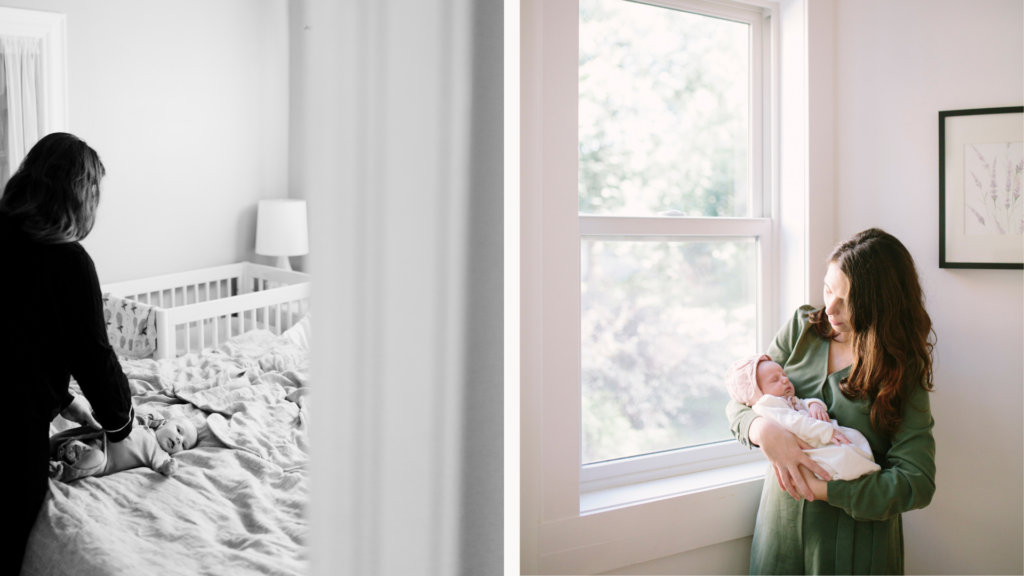
Rest is different than sleep. You will not be regularly sleeping without interruption for many months, if not years. Learning how to rest during the day, especially in the first 6-weeks postpartum, is imperative for your wellbeing. Rest means calming your body and your mind, giving both a break from endless do-ing. There are many ways to support getting adequate rest postpartum, and it’s important to figure out what works for you. Some people respond well to calming scents. Others rediscover a love for reading uplifting stories or listening to beautiful music. Some respond immediately to gentle stretching and breathwork.
Yoga Nidra is one option I often recommend. It’s a guided, meditative yoga practice done lying down with your eyes closed, and it can help you feel deeply restored in a relatively short period of time. There are many other ways to support rest, and we explore these in our Innate Postpartum Class.
One of the most beautiful aspects of The Innate Postpartum Class is that you are encouraged to come with your partner. That way, you both learn what postpartum recovery truly requires, and your partner understands how to support you through this transition. In class, we create a postpartum plan tailored to your needs, temperament, and real life—so you’re prepared before baby arrives and supported through both the joys and the challenges of this monumental time.
We offer group classes (with a virtual option if needed), as well as individual family consultations for those who can’t make a group session. You deserve to rest, heal, and be surrounded by supportive people as your family grows and you cross the monumental threshold.